Celebrating Rejection!

While perusing the news recently, I came across a top-ten list of glitzy jobs, which can, in reality, be quite horrible. Top of the list was publishing/writing.

Yep!

Beyond entertaining us, I don’t think the reporter hoped to dissuade anyone from pursuing a demanding, onerous career. But, the cautionary article reminds us there’s a reason we refer to one’s profession as work. 

I love writing and equally hate it. But, I cannot ignore the call to create.

Submitting stories to publishers for consideration is a rite of passage for aspiring authors. Experiencing rejection is inevitable. Knowing this helps, but it still stings. 

After thinking it over, I decided to post the first story I felt brave enough to submit for publication. It also holds the distinction of being the first rejection! It will forever remind me of dipping my toe into the maelstrom of professional writing for the first time. Ha! Perhaps I sound dramatic, but I’d ask you to forgive me for indulging a freshly bruised ego! 

This past Monday marked the beginning of August and the ancient Gaelic holiday, Lughnasadh. It’s midsummer, and the harvest times have arrived. I often revisit Shakespeare’s Midsummer Night’s Dream around now and consequently find myself musing about faeries. It seems to be an apropos time to share my sci-fi/fantasy mash-up tale about a twenty-fifth-century young man’s strange encounter with the fey on the summer solstice.

The original short story is a bit long to post all at once on my blog. I will dole it out over a series of shorter episodes. 

Enjoy! 


The Fern Flower Summons”(Part One)

1900 hours, June 20, 2507

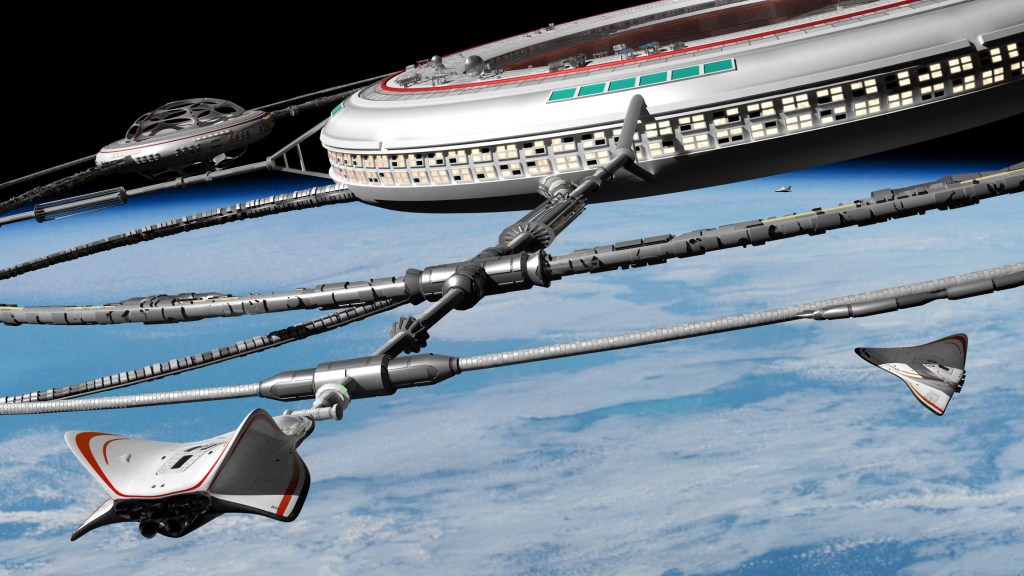
The orbital cities encircling Earth dominated the twilight sky like a bejeweled girdle of brilliant light, occulting even the brightest stars. Beneath them, an old man gazed blissfully across a meadow, admiring the fireflies.

“More this year. A good omen.”

 Peering beyond to the forest, he frowned.

“Jeeves, Alfred, I’ll continue on alone.”

The servant droids waited with the luxury hovercraft. 

“What’s this about?”

“Superstition.”

“Regarding?”

“Faeries and flowers.”

“Seriously?”

“Sir has solemnly observed solstice for eleven years now.”

“What does Sir seek in the forest?”

“I know not, but he always returns disappointed.”

0600 hours, June 19, 2433

Earning the opportunity to attend an elite academy on Earth had been difficult. But Connor had succeeded. Knowing most people struggled to afford even a brief once-in-a-lifetime vacation to the planet underscored his good fortune. But, before long, Connor realized obtaining a scholarship to Bright Star Academy didn’t equate to earning social parity with his surface-dwelling classmates. After weeks of failing to fit in, ignored by most and taunted by some, he became increasingly self-conscious about being the only Orbital at school. 

Catching the academy’s private shuttle down to campus in Buenos Aires required waking a couple hours early, but Connor didn’t mind. He thought that being able to ride aboard the luxury transport made up for it.

“Good Morning. How’s New Seattle’s future poet laureate?”

“Morning, John. Tired and hungry.”

On the first day, Connor thought the shuttle pilot was teasing him but soon realized the man spoke with a sense of comradery. John explained Orbitals had to stick together when navigating amongst the surface folk. 

“Hop in. Tonya’s serving up coffee and the usual surface-style breakfast.”

Connor noted only one other person in the cabin, an unfamiliar professor, sipping coffee and reviewing his papers. He settled into a plush, spacious seat next to a large window. Connor loved observing the stark, inky contrasts of space gradually morph into the hazy, soft blue of the planet’s atmosphere. While selecting something from the menu, he heard a warning chime. 

“Unexpected magnetic field disturbance. Possible solar wind uptick. Departure delayed approximately twenty minutes.”

“Damn!” Connor muttered.

He hated being late; it only accentuated that he lived in orbit. Two of his classmates relentlessly bullied him because of it. Connor fretted, anxiously watching the minutes pass until the shuttle gained permission to leave. 

“Finally! I just might make it in time.”

As the shuttle neared Earth, Connor saw the Andes looming far off in the west. Below, green, gold, and brown patches of farmland spread across the extensive Pampas. Buenos Aires lay further off with the Rio de la Plate estuary glittering behind it. Connor longed to explore these places, but his travel documents only allowed him to attend school. 

He grew up with stories about a dark past when people fled a toxic, used-up planet for an artificial sanctuary in space. Time and technology promised a chance to return one day, but most were still waiting. His father, like many, argued against continuing the draconian resettlement restrictions. Connor wasn’t interested in politics, but the flights back and forth to school had opened his eyes to the vast disparity between life on the planet and that above. 

After landing on the school grounds, Connor sprinted to class, eager to get there on time. Just outside the door, he paused to catch his breath. Hearing disorderly chatter, he peeked inside, finding no sign of Professor Dabrowski. Confused, he checked the time only to discover how late he was. Quietly entering, Connor tried unsuccessfully to avoid attention while taking his seat. 

“Incoming! Falling from orbit fast!”

“Meteor?!”

 “Nope, space junk.”

Snickering percolated the unsupervised classroom. 

“Hey, Orbit. Trouble landing?”

Connor sunk further into his chair, reddening. 

“Security quarantine you again?”

“Probably took one look at your face and sent you to decontamination.”

Connor ignored the taunts knowing any reaction only prolonged the harassment. Relief washed over him seeing a disheveled man jog into the room. 

“Class, sorry I’m late!”

“Good morning, Professor Dabrowski.”

The salutation stopped the old man short. Warily scrutinizing the room, he smiled.

“Yes, it is a lovely morning. I confess I had my doubts.”

Shuddering dramatically, he scowled.

“Administrative meetings. Wretched things.”

Post-apocalyptic literature heartened Connor, giving him a reason to continue attending Bright Star Academy. While his privileged classmates sneered at Professor Dabrowski’s antiquated mien, Connor basked in it. The old man’s appearance harkened hundreds of years back to the 21st century. Eschewing modern fabrics, the teacher’s clothes consisted of scratchy, natural fibers incapable of acclimating to the environment. The man actually endured perspiration. 

“Before beginning, I’m delighted to inform you of a last-minute opportunity to earn extra credit this weekend!”

The class groaned. 

“Now, none of that. I expect you’ll feel differently learning what Professor Dalton introduced to the faculty today.”

“What?”

“A dimensional scanner.”

Pandemonium erupted.   

“No way!”

“How’d the academy pull that off?”

“Aren’t dim-scanners classified?”

Professor Dabrowski raised a hand for silence.

“Fortunately, our headmaster worked intimately with the scientists involved in humanity’s first contact with Para, our interdimensional neighbor.”

“Professor, didn’t Dean Choi lead the Orbital Collider Project before coming to Bright Star?”

“Yes.”

“Professor, what’s the Orbital Collider Project?”

Disbelief punctuated the air. 

“What? Am I the only one in the dark?”

“Probably not; I applaud your bravery in admitting it. Allow me to illuminate. The Orbital Collider is where astrophysicists first created a stable micro-singularity, making it possible to interact with parallel universes.”

“Oh yeah! Like Para! I knew that.”

“Yes. Well, done. Now, due to these connections, Dean Choi’s been invited to join the I3 Taskforce.”

Someone raised a hand. 

“Yes, sorry. The Interdimensional, Interspatial, Intertemporal Agency.”

“Can I use the lavatory?”

Rolling his eyes, Professor Dabrowski nodded.

“Professor, how does this relate to the dim-scanner?”

“The headmaster’s tasked the faculty with finding ways to incorporate this new technology into the curriculum. Professor Dalton and I volunteered to pilot using the dimensional scanner with students.”

“How?”

“Well, upon hearing communication between worlds is possible, myths and fairytales immediately came to mind.”

“Those are children’s stories, Professor.”

“I’m convinced there may be a kernel of truth to them. Let’s consider. Is it possible stories of fairy circles, hidden kingdoms, and magic portals were simply primitive attempts to make sense of frightening encounters with interdimensional beings?” 

“The dim-scanner, Professor?”

“Oh, yes! We’ve organized an excursion to my ancestral homeland of Poland, during which we shall endeavor to reenact the ancient rituals of the summer solstice. Professor Dalton will assist students in deploying the scanner to capture fluctuations in dimensional radiation throughout our visit. I, for one, am quite eager to learn if any of the old customs will have any measurable impact.”

Connor’s pulse quickened, wondering where he’d find the money to go on the trip. He knew he’d have to find his own way to the surface. Unlike his peers, his family didn’t own a transport.


This tale was inspired by a submissions call from Shoreline of Infinity Magazine for their upcoming September 2022 issue themed around science fiction fairytales. Hope you check it out. I’m eager to read what made it in!

Flash Fiction: “The Outsider” (Director’s Cut)

Ever bemoan cutting favorite elements from a story to keep within a word limit? What is an author to do? Rise to the challenge of course! But sometimes it’s gratifying to indulge oneself and post a lengthier “director’s cut”. If filmmakers can do it, why not writers?

Photo by Pixabay on Pexels.com

“The Devil Is In the Details” (Author’s Cut)

Brody Quade cursed, hearing the sharp rap at the door.

“Police! Open up!”

Brody marveled at how quickly they had managed to locate him. He made a mental note to better research this world’s technological capabilities.

“Half a moment! I’m coming!” Brody lied.

He quietly gathered his essentials and keyed on his transporter.

“Come now, Mr. Quade, the gig’s up! Surrender peacefully! This doesn’t have to end with violence!”

Brody could hear their attempts to override the lock.

“Alright! Alright! No, need to destroy my door!”

Casting a longing look at his collection of stolen goods, Brody lamented all the hard work, now wasted. Shame to lose it all so close to the end, he reasoned. Rummaging about, he greedily stuffed a few odds and ends into his pockets.

“Time’s up, Mr. Quade! Any blood spilled is on your head!”

Before he could respond, Brody detected the sound of a barrier-breacher powering up.

“Blast! They’re quite insistent! No, time for calibration.” Brody muttered.

Perspiration blurred his vision as he hastily inputted the obscurest coordinates he could recall off the top of his head.

“A valiant effort, Inspector! But, I remain as always one step ahead!”

Brody laughed manically as the authorities disintegrated the door just in time to see him slip into another dimension.

He endured an unusually long and rough transit before the transporter finished relocating Brody.

“Phew! That was cutting it too close.”

Swiping his brow with a handkerchief, he paused to orientate himself to his new surroundings. Brody smiled, recognizing the crowded café. The aroma of coffee mingled with the dry, desert heat creating an inviting atmosphere he knew would soothe his frayed nerves. He wove his way in and sat at a table being cleared.

“Triple espresso, please.”

Looking up, the server huffed and hurried off without any response.

“Rude.”

He waited, preparing a scathing rebuke. But indignation turned to shock when the waiter returned to seat an elderly couple at Brody’s table.

“Voila, Monsieur, Madame. A moment while I fetch your drinks from the bar. Apologies for the delay.”

As they proceeded to sit at his table, Brody experienced a bizarre whirl of force whisk him abruptly from his chair onto the floor.

“Well! I never!”

Clawing at the table, he pulled himself back up.

“Mind your feet, Mario. You’ll upset the table.”

“I haven’t touched the table.”

“Well, something did.”

“Perhaps, a tremor. This local’s suspectable to such activity.”

Brody glowered, hands on his hips.

“I say! What the devil has possessed you to assume you can just barge in and hijack my table? Waiter!”

The woman looked up from her menu.

“What’s that, Mario?”

“I didn’t say anything, Harriet.”

“You were muttering something, dear.”

“I most assuredly was not.”

Blood drained from Brody’s face. He pulled out his transporter, unsurprised to find an error notification flashing across the screen. Opening the message, he swore as he read the details.

[INSUFFICENT DATA. TRANSFER INCOMPLETE. LOCATION OUTSIDE STANDARD DIMENSIONAL PARAMETERS.]

“Blimey, stuck in between again!”


Read Original 75 Word Version Written for Chronicles’ July 75 Word Challenge.


Prompt: The Outsider

Word Count 500

Micro Fiction: “The Outsider”

An exceedingly short piece of speculative fiction!

Photo by Pixabay on Pexels.com

Some of you know, I enjoy the challenge of writing a story with as few words as possible. Definitely an acquired taste for only some writers and readers! Below is what I entered for Chronicles’ (A Science Fiction and Fantasy Community) 75 Word Challenge for July.

There were 41 entries this month!

I encourage everyone, who loves science fiction and fantasy, to check out this website. Great way to connect with other writers and fans! Perhaps, you might entry next month’s challenge?

The prompt this month was “THE OUTSIDER”. Genre was author’s choice of horror, speculative, fantasy or science fiction. Hope you enjoy my entry below!


“The Devil Is In the Details”

Desperate, Brody hastily inputted coordinates to escape back into his own dimension.

Frazzled, he sought solace at a favorite café.  

A couple approached to join him. Before he could protest, eddies of nausea swept him onto the floor. 

 Brody stood up, hands on his hips. 

“Excuse me! But this table’s mine!”

“What, Mario?”

“I didn’t say anything, Harriet.”

Disquieted, Brody checked his transporter. He blanched, observing the error message. 

[INSUFFICENT DATA. TRANSFER OUTSIDE DIMENSIONAL PARAMETERS.]


Prompt: “THE OUTSIDER”

Word Limit: 75 words.

Gold for Indie Authors? Book Reviews!

Photo by Pixabay on Pexels.com

When I’ve connected with a new book, I almost feel obligated to share a review. I suppose it’s only natural to want to share what one is excited about. But, as a new writer (nowhere near publishing anything yet), I am also beginning to understand how much time and effort it takes to craft a quality story. Once complete, the author sends their creation out into the world, praying others will also love and cherish it as they do. One of the best things we can do for our favorite indie authors is post reviews of their books. I encourage everyone else to do the same.


Book Review: Mother Portia by Nick Pipitone

Science fiction is rife with chilling stories concerning the inevitable emergence of self-aware artificial intelligence. Usually, the reader is confronted with a doomsday scenario, portraying an outmatched humanity battling for survival against its malevolent creation. Nick Pipitone’s novella, Mother Portia, takes a refreshingly different approach to explore what might happen when a supercomputer becomes sentient.

Pipitone imagines a promising future. After decades of teetering on the brink of self-annihilation, humanity’s salvation comes from a benevolent, all-knowing, artificial super-consciousness called Portia. Incredible scientific advances made possible with the help of this AI technology have solved the most pressing problems challenging the planet in the 21st century. But, the reader quickly discovers lurking behind this utopian façade is an enduring culture war fomenting a growing level of distrust, unrest, and acts of violence.

Leave it to humanity to take a good idea and mess it up! Most people happily abdicate power, ambition, and values in a mad rush to enjoy the new freedom Portia offers. There is no need to work. Advances in healthcare have eliminated disease, old age, and even the need for sleep. Life becomes nothing more than the pursuit of pleasure for most. But, not everyone agrees Portia has changed the world for the better. As one can imagine, the rampant rise in hedonistic behavior threatens to undermine the authority of institutions espousing traditional morality and family values. Adding fuel to the fire is the fact that a new, increasingly popular cult has emerged dedicated to worshipping and communing with the new god of science, Portia. The world’s traditional faiths begin reeling from a rapid, seemingly irreversible decline in membership and relevancy.

Repulsed by the deification of Portia, members of various faiths have joined together to fight this common enemy. The result is the Collective, a loose alliance committed to ridding the world of artificial intelligence at all costs. It is quickly labeled a terrorist group. Mother Portia is a thought-provoking exploration of humanity’s inclination to use religion to justify even the most heinous acts of violence.

Azibo, a devout Christian, refuses to interact with Portia, leaving him isolated, living a meager existence on the fringes of society. He finds purpose though working as an informant for the Collective. When offered an opportunity to do more for the cause, Azibo is elated and ready to sacrifice everything. But, as in real life, he finds his beliefs challenged as he encounters a broad spectrum of other members of the faithful struggling to respond and adapt to this new world. He soon discovers the notion of truth is easily contorted by those eager to remain in power.

The story’s true antagonist is humanity’s inability to purge itself of hatred and intolerance driven by contrived differences. I appreciate how the author avoids making any overt judgment about the morality of creating artificial intelligence. Mother Portia is a thought-provoking exploration of how one man’s quest to destroy a hated enemy leads him to unexpected good fortune in the arms of what he fears the most.

Follow the links to download and read: Mother Portia by Nick Pipitone

Check out more of Nick Pipitone’s writing at his website: Fiction and Ideas

Flash Fiction: Psychological Warfare

Here’s this month’s attempt at micro fiction! My goal is to effectively convey an image or idea with very few words. Fun, but quite challenging! Hope you enjoy!

“Victory, together, no matter the cost! Venerate, protect, our supreme overlord!”

Why am I shouting?

Left, left, left, right, left.

I can’t stop marching!

Edward awoke, upright, moving, surrounded by soldiers. Bewildered, he struggled to remember.

What’s going on?

Images remerged of a demagogue railing against traitors within and enemies without.

(Resist. You’re brainwashed.)

Who’s there?

(We’re overriding your programming remotely. You’re free to think and do as you please.)

Edward halted, dropping his weapon.


Word Count: 75

Word Prompt: march

Prompt from Chronicles Science Fiction and Fantasy Community‘s 75 Word Challenge.

Jupiter’s Embrace (Chapter Four)

I love writing, but sometimes coaxing the words on to the page can be a real slog! This week has been especially tough as I returned to working on the next chapter for my book, Jupiter’s Embrace.

I have to admit I’ve struggled a lot with this story and given into the temptation to leave it on the back burner more often than not. But, I’m committed to figuring out what ultimately happens to Riker, Pauline and Johnny.

This project began in response to the word prompt: float.

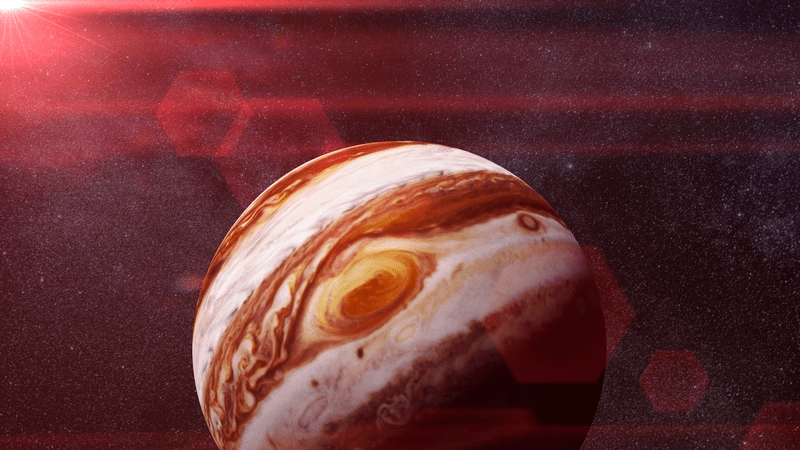
The original piece was a mere 500 words portraying a snapshot of a prison transport ship ferrying a hardened criminal to a maximum security facility floating deep within Jupiter’s atmosphere.

I found myself wondering how Riker wound up on that spaceship.

Jupiter’s Embrace has become a story about how a man guilty of one crime becomes a convenient scapegoat for an even greater one.

Much remains to be discovered, but I know Riker is a flawed character worthy of redemption. He’s the classic example of someone at the wrong place at the wrong time, who knows too much and wishes he knew nothing at all.

If you have read along so far, I hope you enjoy chapter four. But, if you haven’t read the first three chapters, I encourage you to do that first.

Here’s a link below to earlier chapters.

Flash Fiction: Even Better!

Photo by SpaceX on Pexels.com

Massachusetts – December 2, 2021 – 6:17 PM

Observing the approach of twilight, Tony smiled. He was an avid, amateur astronomer. 

Ah, nothing better than stargazing on a clear, moonless winter night. 

Yet, unbeknownst to Tony, something even better was about to happen.

Cold air stung his lungs as he stepped outside. He wished he had remembered to bring a hat. Road salt crunched beneath his feet. Buttoning his coat tightly, hands deep in his pockets, he began his nightly walk around the block. 

Rounding the bend, Venus blazed brilliantly, low in the western sky. 

Hey there, Gorgeous!

Tony settled into a modest pace.

The twinkling lights from neighborhood windows paled in comparison to nature’s display above. Craning his neck, he greeted each constellation like an old friend.

Glorious! Simply glorious! 

On his return, Tony noticed his next-door neighbor peering out suspiciously. Every night the older woman sat sentinel on her porch. Her presence always made him feel like an intruder. He imagined her scolding. 

Don’t step on my lawn! Pick up your dog’s poop! Drive carefully! Don’t speed! Whose car is that? Who is this stranger? Why is that man looking at me? 

Hoping to convey he was stargazing, Tony scanned the sky with exaggerated gestures like a man playing charades. 

No interloper here, Gisele. No one is peering into windows.

Turning his back to his neighbor, Tony looked up across the street. An unfamiliar sight immediately caught his attention.

A long chain of blinking lights stretched across a sizable length of the sky.

What is that?

The lights resembled airplane headlights. Tony figured there were at least forty moving in close formation. But they weren’t moving toward Tony. Instead, they sidled slowly across the sky like a train.

It can’t be airplanes! Those lights are moving together as one object! I need someone else to see this!

Tony fumbled for his phone and called his daughter. Waiting for her to answer, he watched, mesmerized as the leading lights faded. One by one, the lights vanished like the portholes of a turning ocean liner. 

“No! No! No! No! Come on! Wait!”

His daughter answered.

“Why are you yelling?”

“Isabel, come out here! Quick! Something’s in the sky. You need to see this!”

“Ok, ok! Give me a second. I’m in my pajamas.”

Isabel didn’t make it outside in time.

“They’re gone,” Tony said. 

“What happened? What’s gone?”

Tony explained what he saw. 

“Do you think it was a UFO?” Isabel asked.

“I don’t know. It sure wasn’t a plane. It was way too long!”

“How long was it?”

“It was as long as that house’s roof, but far away, up in the sky.”

“That long?!”

 “Yeah. I wish you or someone else had seen it.” Tony said dejectedly.

“Wait. Look online to see if anyone else saw it.” Isabel offered.

“Nothing is going to be online yet,” Tony said. “Oh! Maybe, I could ask Mrs. Boulanger if she saw anything? She’s sitting on her porch as usual.” 

“No, Dad. That’s a bad idea. You’ll frighten her. I’ll get my phone and google it.”

His daughter ran inside. Tony remained outside, hoping the lights would reappear. A few minutes later, she hurried back.

“Is this what you saw?” 

He studied the video clip on the screen. 

“Yes! That’s it!”

“Dad, you saw a string of satellites.”

“What?”

“SpaceX launched forty-eight Starlink satellites today.”

Tony was disappointed.

“Satellites? Guess that’s pretty cool, but it would have been even better if it was a UFO.”

Later that evening, sitting by the fire, Tony reflected. Forty years ago, before the advent of the internet, he would have wholly believed those lights were extraterrestrial.

December 2, 2021: The Pentagon, Washington D.C. – 10:48 PM

“Quick thinking, Colonel.”

“Yes, well, we sure as hell can’t have the whole nation panicking. Damn ETs!”

“Perhaps, tonight’s visitors were new? They certainly didn’t follow the protocols for a visitation. Should I place a call to the galactic ambassador?” 

“Yes.” 

“Should I file a complaint?” 

“No. Don’t need to ruffle any alien feathers or scales. Politely remind them they need to prevent rogue excursions into the atmosphere. We still need to figure out how to disclose contact officially. In the meantime, we need the lead time to concoct a plausible excuse the public will buy.”

“Yes, sir. Good night, sir.” 

“Good night, Lieutenant.” 


Word Count: 726

Written in response to the prompt: Even Better.

Check out all of the other great writing prompts at The Twiglets.

Thank you for inspiring me!

Jupiter’s Embrace Chapter Three

It’s been a long time, but it’s finally happening. I have been redoubling my efforts to tell the story of Riker, Johnny and Pauline. Chapter four is written and just needs to be edited.

This is a work in progress! Feel free to notify me of errors or things you don’t think make sense.


Excerpt from Chapter Three

Johnny

Johnny left the briefing after a few awkward moments with Sharon. He chuckled to himself. The woman seemed decent enough. Oddly, he felt guilty giving her the cold shoulder. When Li finally returned to consciousness and made it back to SS Diligence, he would have a lot of explaining to do if he wanted to keep Sharon around. Of course, after Johnny sprung Riker free, Li would have bigger concerns to content with. If the plan went off without a hitch, it would initially appear as if Li had freed a high-level criminal. Once he and his brother safely rendezvoused with Sean and the kids in the outer system, Johnny would encrypt an anonymous comm claiming responsibility. Including a convincing amount of detail should exonerate Li from any guilt. He didn’t want any bad karma following him. 

Walking toward the launch bay Johnny heard someone running up quickly behind him with a heavy step. Before he could turn around he felt the hearty slap of Pedro’s hand on his back. 

“Man! You always seem to land the best assignments. Damn you and your luck.”

“Thanks.” Johnny answered dryly. 

“Aw…I can’t remember last time I flew down into Jupiter. Love the murkiness!”

Pedro rubbed his hands together with eyes far off in reverie. 

“What’s your assignment?”

Pedro’s face quickly morphed into a look of chagrin.

“Blasted escort again! Escort for Diligence, mind you. Boring.” Pedro drawled out the last word rolling his eyes. “That’s the second time this month!”

“I’ll swap with you.” Johnny found himself blurting out.

Pedro snorted. 

“Think command is still pissed about the the mishap I had flying on Saturn. It’s not like anyone got hurt. The ship came home with only a little scratch!”

Pedro looked exasperated.

“Sorry, man.”

Johnny chided himself. He couldn’t help feeling for other people. An admirable trait to have, but not while on convert assignment. He was relieved Pedro didn’t take the offer to switch seriously. He doubted trading assignments was something you did in the military. 

“Well, drinks are on me when you get back. That’s assuming no piece of pirate slag attempts to free this guy.”

“Thanks again, Pedro.” Johnny tried to sound brave and concerned simultaneously. 

“Relax, nothing’s going to happen. No one is coming. Criminals like him are expendable. The drug cartels don’t give a shit about nothing, but drugs and money. Now, if your shuttle were transporting a shipment of weapons…that would be different, eh?”

Johnny smiled inwardly to himself. Pedro was in for a big surprise because Johnny’s brother was important enough to rescue.

“Who said I was worried?” Johnny tried to channeled Riker’s legendary bravado. 

“That-a-boy. Besides, me and the others will be watching your back.”

“Then what can go wrong?”

Pedro cracked his knuckles.

“Would be fun to have a little action though. It’s been a while since I’ve been in a scuffle. Feel like I’m getting a little rusty. We should hit the simulator soon and run some of the old engagements we fought in.” 

“Definitely. Might be all the excitement we’re going to see here. Can’t have you getting too bored.”

Johnny noted how easily lying came to him the longer he was on this mission. For a moment he himself almost believed Pedro and he were fast friends. He reconsidered the value his ability to connect with people had for this mission.

“Last action Diligence saw was a year ago on Ariel. The fools didn’t know what hit em. The rout we handed them was legendary!” Pedro crowed. 

“Yeah. But, Pedro that makes the likelihood of illegals making a move this far in pretty slim. Now, if we were out past Titan… maybe.” 

Johnny confidently bantered.

Anyone keeping abreast of the news holos knew about the small battle in the Uranus system. Traditionally, Sol Corps took no real notice of the crime syndicates’ activities in the outer system. Humanity had no significant civilian populations that far from the Sun. The territory was unchartered, loosely governed and provided a haven for criminal elements. Until now, most outposts were generally scientific in nature or small private ventures. Although, the allure of cheap raw materials, readily obtained, had fueled a recent spike in larger commercial enterprises. Big corporations clamored for better protection as an ever larger chunk of profits was swallowed up by pirating.

The inner system governments balked at the cost of policing the vast territory past Saturn. Politicians knew the public cared little about corporate losses to the black market. As long as cheap resources continued to stimulate economic growth everyone was happy. Besides, most agreed many politicians were in bed with the major crime bosses.

Yet, hysteria about rumors of an impending Rangari invasion had steadily grown. Despite any credible proof the inhabitants for Alpha Centauri were technologically advanced enough to reach humanity’s star system, the political landscape was rapidly changing. Public concerns were addressed with a slew of new measures increasing military presence in the outer parts of the solar system. Calls were made on the floor of the Planetary Union’s lower chamber to fully incorporated the outer territories into a new political entities. Not a few people felt this was an excuse to exert further control over private interests flourishing in the less regulated frontier past Mars.

Johnny didn’t think Pedro gave a damn about politics or system events. The man seemed solely interested in flying and a good fight.

“Yeah, I think you’re right about that Li. No action for any of us this assignment. Jupiter’s become too tame.”

“That’s supposed to be a good thing.” Johnny playfully admonished.

“I know. I know.”

“You’re right Pedro. Simulator needs to be top of the agenda, once we get some rec time.”

“I’ll be your gunner. Love blowing shit up. Even if it’s holographic.”

They laughed.

Coming upon the launch bay, Johnny held out his hand. Pedro took it, giving it a hearty shake. 

“See you in a few rotations, Pedro.”

“I’ll be in my usual seat in the aft cantina. Meet you there. I expect to finally get the whole story about your leave on Mars. Lim stim? Really?”

Johnny grimaced, feigning disgust. He walked away without replying. Scanning the berth numbers for his shuttle, he suddenly stopped short and turned back to Pedro.

Follow the link below to read the rest of Chapter Three.

Flash Fiction: Last Time He Prayed

I confess I have been avoiding work on the unfinished first draft of my science fiction novel, Jupiter’s Embrace. In an attempt to get the creative process going again, I’m using characters from Jupiter’s Embrace to respond to some flash fiction writing prompts.

This prompt is from The New UnOfficial, On-line, Writer’s Guild. The prompt used is OLW # 229 Love, Dad. (I used the weekly prompt at the bottom of the page called: almost never prayed.)

Photo by RODNAE Productions on Pexels.com

Swallowing a sleeping pill, Johnny set no alarm, hoping for dreamless oblivion. His first time at the helm was disastrous. The smuggled goods were delivered, but there had been an unexpected complication. Embarrassingly, inexperience and indecisiveness nearly led to failure. 

Bleep!

The comm call triggered the dreaded dream. 

Eight-years-old, bewildered, awaken by yelling, he climbed from bed. Edging toward sounds of struggle, suddenly, a hand covered his mouth, stifling a yelp. His older brother carried him away from the commotion. 

Johnny focused on his older brother’s face, trying to understand. Hiding, they waited. Demands and protests grew louder. Threats were made.

“Rike..”

“Shh! Bad guys broke in wanting money. Mom and Dad are taking care of it.”

Trembling, Johnny held onto his brother and prayed. The struggle grew desperate. Blasters fired. Riker pushed him threw the bedroom window. 

“Run! I’m right behind.”

Bleep!

Drenched in sweat, heart-racing, Johnny awoke with a start. He swore. Standing up, he instinctually gazed out the porthole into the blackness of space. Swiping the comm open, he was surprised to see his brother-in-law. His face was serious; worried. 

“Sean?”

“Johnny!”

“Amelia? Jack? They ok?”

“Yes. But, Riker. He’s in Sol Corp custody. There’s been a military tribunal. Riker’s been convicted of being an alien, Rangari spy! Sentence is life on Jupiter!”

Johnny broke into a cold sweat and tried to swallow the taste of bile from his mouth. He realized for the first time in twenty years, he was praying. 


If intrigued and seeking more, click the link below to the first two chapters of the story.

Foundation

Photo by Pixabay on Pexels.com

Review of AppleTV+’s Television Series Based on Isaac Asimov’s Foundation Trilogy.

Some prefer to read the book first; others are drawn to the sounds and visuals of a television or movie adaptation. There will be discrepancies in the telling of the story with the transition from one medium to another and fans will champion their favorite version. But, avid disciples will take pleasure in any opportunity to immerse themselves in their favorite fictional world. If rooted in exploring the human condition, built around archetypal motifs, a tale’s emotional appeal will be timeless.

If a story is a bit older, less well-known to the current generation, reintroducing it visually can be more successful. I’ve heard of the science fiction trilogy, Foundation, but never known enough to entice me to read it. Big mistake on my part, I suspect!  At least that’s how I’m feeling now having seen the first part of a brand-new television adaption of the story. Just as the trailer for Star Wars captured my attention back in 1977, it was the trailer that lured me in.

Eagerly anticipating last Friday’s premier, I allocated a portion of my Saturday toward sitting too close to the screen, volume high to watch the first episode. AppleTV+’s Foundation trailer had haunted my imagination for weeks with glimpses of beautiful imagery of otherworldly skies, dominated by multiple moons, differently colored suns or planetary rings. I was not disappointed. The style of the costuming and set design felt authentic; organic. The intro sequence conveyed a sense of grandeur and modernity reflective of the art from the early twentieth century art deco movement.

Isaac Asimov, along with Arthur C. Clarke and Robert A. Heinlein, is consider a member of sci-fi’s “Big Three”. These authors popularized science fiction, while setting the standards for the genre. This was my first exposure to Isaac Asimov’s, Foundation Trilogy. I instantly fell in love. Despite reading one of his first novels and enjoying it, I never read any of his other writing. I was simply overwhelmed by his prodigious collection of work. I wondered to myself, should I read his books as they were published or according to the fictional chronology of the galactic empire he invented. The former path felt choppy; the latter was honestly difficult to map out. Just browsing through Asimov’s bibliography can be daunting.

As a budding author myself, I am beginning to understand a writer’s ideas, plots and characters often take control, dictating what is to be written next. Asimov appears to have explored his universe from a myriad of angles, using various unconnected plots and a multitude of characters. I propose fictional writers act as pseudo-archeologists sifting the sands of the mind, hoping to uncover clues revealing unknown worlds. This first ever adaptation of Foundation for television helped me discover how desperately I want to read more of Asimov’s novels.

The first episode commenced with introducing Gaal Dornick, a young mathematician, living on a planet governed by a theocratic society outlawing the pursuit of science. Gaal is punished, excommunicated and sentenced to death for solving an enigmatic mathematical problem. Offer of aid comes from a famous, off-world scientist on Trantor, the imperial capital planet. The Galactic Empire has reigned for 12,000 years, developing an advanced futuristic society. The immensity of the empire is possible due to its ability to warp space and time, allowing people to jump the vast distances between star systems. Gaal travels to meet her scientific idol, psychohistorian, Hari Seldon. Believing she has found a safe environment to further her mathematical studies, she quickly learns she has come too late. Imperial authorities may support, fund and celebrate scientific discovery, but not when the facts predict a future unpalatable to those in power. Seldon’s recent work warns of a looming, catastrophic collapse of civilization across the entire galaxy. Empire, the supreme ruler, who in reality is a trio of clones, refuses to accept the science behind Hari Seldon and Gaal Dornick’s work. Arrests are made, court and legal proceedings are held and both are charged with treason.

Photo by Markus Spiske on Pexels.com

If you have followed my blog from the beginning, you know I view storytelling, as a means to exploring life, because fiction is always reflective of the real world. From the onset, this story felt incredibly relevant to our world’s current situation. Amazingly, Isaac Asimov started work on Foundation during the middle of the last century! But, it still seemingly anticipates today’s clash between governments and the scientific community. On one side, scientists are sounding the alarm, warning action needs to be taken to avert devastating, changes to our planet. An opposing group of multinational corporations and politicians, fearing loss of profits and control of society, challenge the legitimacy of scientific reports. The battle over what is fact and what is fake is relentlessly. The end result is a confused and conflicted populace longing for a clear, unbiased insight to inform their own decisions and actions. I haven’t read or seen the entire Foundation Trilogy yet, so I don’t know how it ends. Of course, none of us knows how the current conflict over global climate change will play out either.

Isaac Asimov’s work also harkens back to elements found in human history. The name of the story Foundation comes from a line spoken by the character Hari Seldon. When asked if the crisis can be averted, he explains the looming catastrophe is inevitable. But, he offers a glimmer of hope. Seldon explains steps could be taken to build a repository of all the most treasured aspects of civilization. This cache of essential information would act as a foundation on which survivors of the empire’s collapse could build on. The goal being to shorten the times of darkness. In essence this was a role played by religious monasteries throughout Europe during the Dark Ages preceding the fall of the Roman Empire. Even the famous library at Alexandria is alluded to in Foundation. Hari Seldon recognizes that when the collapse comes the Imperial Library on Trantor will burn, just as the real life Alexandrian library did. 

Photo by Pixabay on Pexels.com

Graham Handcock, a modern day scholar theorizes a similar, tragic erasing of a civilization happened on Earth. He argues an unknown ancient society existed far earlier than mainstream historians and archeologists allow. His books, Fingerprints of the Gods and Magicians of the Gods, lay out his proposed evidence of a forgotten, advanced, global civilization destroyed by a cataclysmic event. Scrutinizing clues found in myths, ancient texts and architecture, he believes survivors from this forgotten civilization, safeguarded their knowledge, hoping to pass it on to the less advanced remnants of humanity. He argues the theme of a helper race of gods or angels is present in all of the world’s mythology. Approaching this idea esoterically, Edgar Cacye, a clairvoyant in the early twentieth century, famously claimed to have remotely viewed a secret chamber beneath the Sphinx in Giza, Egypt. The existence of a subterranean room beneath the Sphinx has been confirmed with modern, remote-sensing equipment. Interestingly, no requests to explore it have been approved by Egyptian authorities. Cacye declared the chamber held lost knowledge leading humanity to the Atlantean Hall of Records. This mystical repository of knowledge is rumored to provide access to technology more advanced than what we current possess today. Yes, strange as it may sound, there are intelligent, serious people ] searching for a real “Foundation” created by a destroyed, advanced, prehistoric human civilization.

I have no idea if there is any truth to tales of Atlantis, but the story itself is rich, full of hope and a jumping off point for the imagination. Presumably, Isaac Asimov knew of this well known myth told to us by Greek philosopher, Plato. Perhaps, he had even heard of Edgar Cayce’s clairvoyant work. However, I do know Asimov was a scientific thinker and serious scholar gifted with an imaginative mind. This scientific background coupled with a vibrant imagination makes Isaac Asimov’s work authentic, informative, and enjoyable. I suspect, he would agree that pretending, thinking outside the box and wondering about impossibilities leads to amazing real discovers. Fiction does truly empower creativity. I entreat you to read it, watch it, write it and dare you to challenge the limits of what is possible.